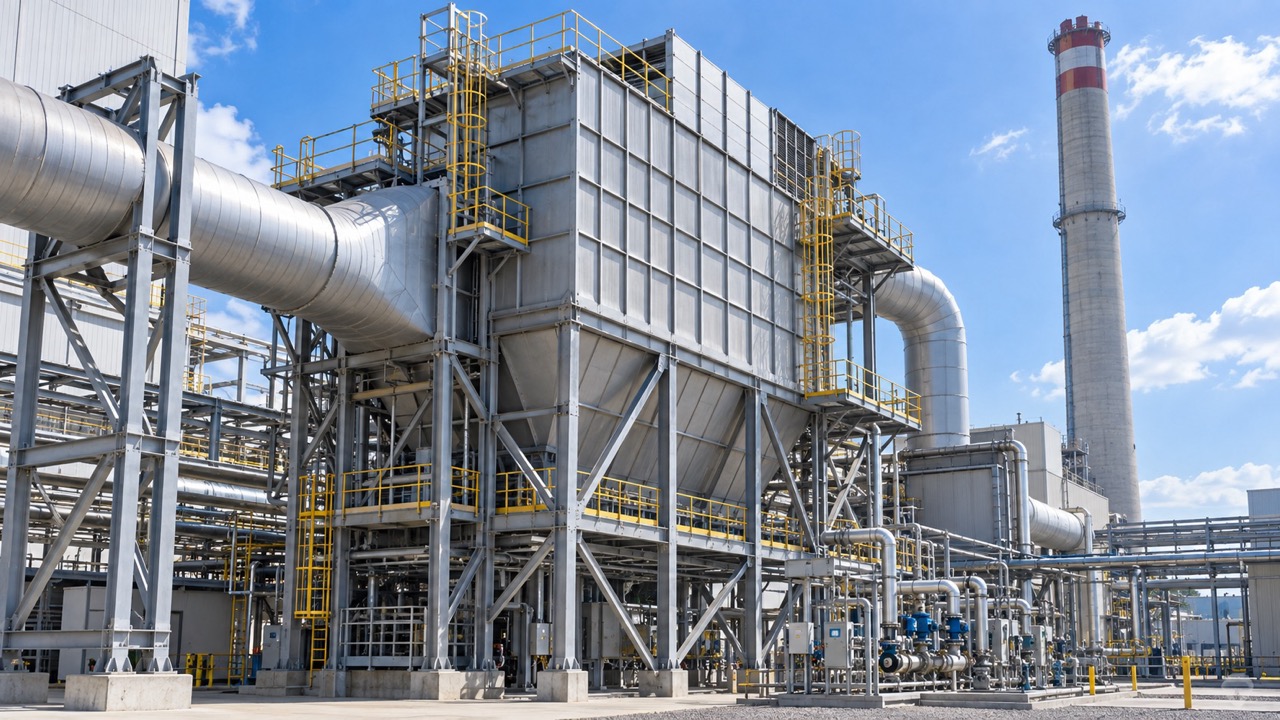
Selective catalytic reduction for the combustion plant that sits alongside battery storage and hybrid energy schemes — specified around the engines, the fuel and the NOx limit for the site.
Discuss Your ProjectA battery energy storage system stores electricity and releases it when the site or the grid needs power. Storage is often developed with other assets: gas engines, diesel generators or turbines that cover peaks, provide resilience, or run as part of a hybrid scheme. Those engines produce exhaust. The batteries do not.
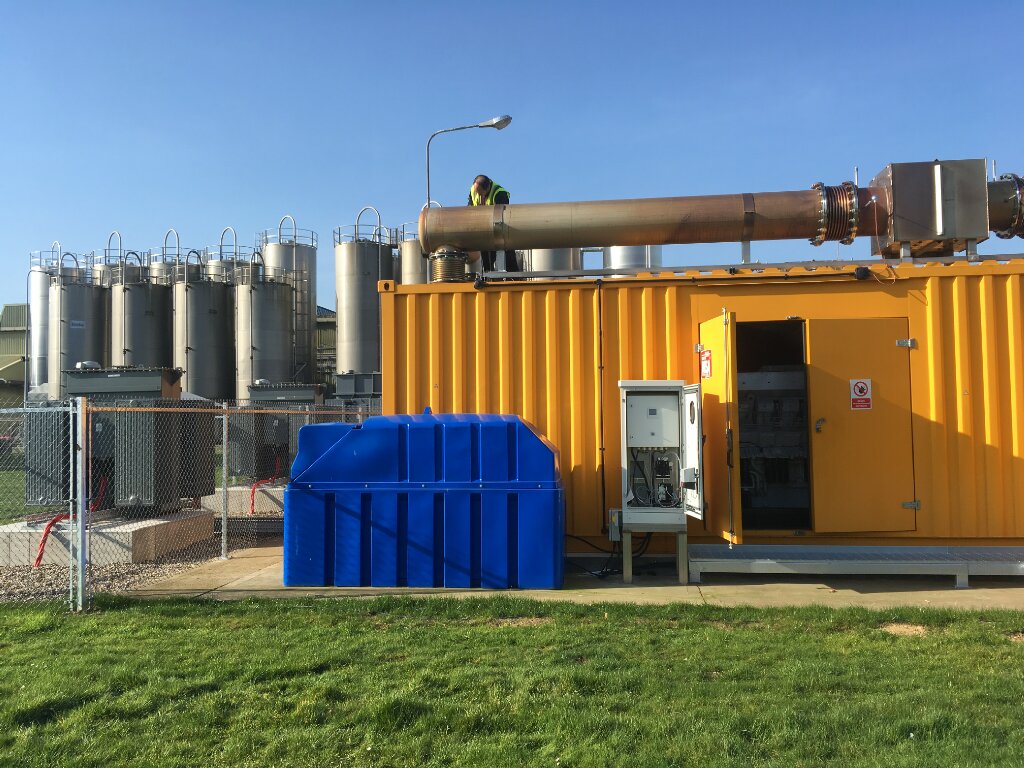
Selective catalytic reduction (SCR) converts nitrogen oxides (NOx) in that exhaust into nitrogen and water. An atomised urea reagent is mixed into the gas stream and passes over a catalyst. Agriemach designs the system to a stated NOx target, with reduction of up to 99% where the application allows.
Agriemach has worked in emissions control since 1990. For a storage or hybrid project, we design, manufacture and project-manage the SCR for the associated combustion plant — including installation, commissioning and UK support — so the engines are engineered with the wider scheme.
SCR scope is set around the engine and the installation, from first design through to service.
SCR is applied to the exhaust of combustion plant on the site: gas engines, diesel generators or turbines used for hybrid generation, grid support or standby power. Battery capacity does not decide the emissions duty. The engines, the fuel, the hours they run and the permit do.
In the UK, the Medium Combustion Plant regime covers combustion plant from 1 to 50 MWth. It includes a NOx limit of 190 mg/Nm³ at 15% O₂ for many gas-fired engines and generators, depending on plant type and application. Emergency backup can sit outside those controls only where testing stays within 50 hours a year and the sets do not export electricity or take part in balancing services. Engines that export, or that run to support the grid, are assessed against the duty that applies to them. Our MCPD guide sets out that framework in more detail.
Electrical
Charges and discharges. No combustion exhaust.
Combustion
Gas engines, diesel generators or turbines.
Engine exhaust only enters the SCR path
01
Atomised reagent injected to the NOx load
02
Even distribution in the exhaust stream
03
NOx converted to nitrogen and water
Treated exhaust leaves through the stack. Storage stays on the electrical side of the project.
Containerised generation is a typical partner to storage and hybrid sites. SCR, ducting, urea storage and silencing are arranged around the engines and the space on site.
Bespoke design, manufacture, installation, commissioning and project management for reciprocating engines and gas turbines. The scope can include dosing, the reactor, combined silencer and SCR assemblies, insulation and bulk urea storage.
SCR systemsUrea dosing, mixing and a catalyst surface bring raw NOx down to the agreed output. Reduction of up to 99% is achievable on suitable applications — illustrated on our SCR systems as a reduction from 500 mg to 50 mg. The figure for a project is confirmed in the design, against the engine and the limit.
We work to the NOx limit the operator has been set, including the Medium Combustion Plant value of 190 mg/Nm³ at 15% O₂ for many gas-fired engines. Chemical engineers recalculate limits where the oxygen reference differs. The permitting authority remains responsible for the legal duty.
MCPD NOx reductionThe SCR is engineered to the engine and the exhaust: fuel type, ducting, backpressure, urea storage and silencing. PLC monitoring covers engine load, raw and treated NOx, temperature, backpressure and dosing. 3D CAD and CFD are used where the layout has to be proven for the site.
Combustion plant on these developments is where an SCR specification is made. Each description follows the duty of the engines, which is what sets the emissions work.
Storage schemes that include gas or diesel generation on the same site. The SCR is specified for those engines.
Sites that pair storage with reciprocating engines or turbines. The SCR has to suit the fuel and the load range the engines are expected to run.
Backup sets serving an energy or industrial site. Emergency-only plant can fall outside some Medium Combustion Plant controls. Sets that export, join balancing services, or run beyond the testing allowance are assessed on that duty.
Engines dispatched for reserve or balancing. Short or variable runs change exhaust temperature and dosing, so the operating profile is part of the SCR design.
On-site generation for factories, utilities and process plant, with or without storage. The same design route applies: engine, fuel, target NOx and the space available for the reactor.
Emissions work has been part of the business since 1990, with installations across the UK and Europe. The points below are the support we provide on an SCR project.
An in-house engineering department designs the system for the application. Site service engineers are available when an installation raises a question during or after commissioning.
Each system is designed for the engine, the fuel and the target. Fuels include natural gas, biogas, diesel, biodiesel and HFO. 3D CAD and CFD are available where the ducting and reactor layout need to be demonstrated.
Chemical engineers recalculate NOx limits at different oxygen references, so a permit figure can be compared with the engine data on the same basis. Scope is set out before manufacture, against the duty you describe.
Design, manufacture, installation, commissioning and project management sit in one scope, followed by UK training, service contracts, catalyst replacement and dosing-system upgrades.
These are the points we review with the engine and the permit. They decide the reactor, the dosing rate and the layout.
NOx forms in the combustion process. SCR treats the engine exhaust and is sized to the raw level and the permitted output. Limits are quoted at a stated oxygen reference, and that reference has to match before two numbers are compared.
Load, run length and how often an engine starts all change exhaust temperature and the time the catalyst spends at working temperature. Grid-support and hybrid duty is often variable. Agriemach PLC panels monitor load, temperature, raw and treated NOx, backpressure and dosing in operation.
The UK Medium Combustion Plant regime covers plant from 1 to 50 MWth and sets 190 mg/Nm³ at 15% O₂ for many gas-fired engines, depending on plant type and application. A planning condition or permit can set a different figure. We design to the limit supplied for the project.
The reactor, dosing equipment, urea storage, compressed air, silencing and insulation have to fit the exhaust route and the engine’s backpressure limit. Combined silencer and SCR assemblies, heat insulation and remote monitoring are part of the equipment range where the installation needs them.
Fuel, engine model, available space, new-build or retrofit, and the target NOx are taken together. Where the duct routing is constrained, 3D CAD and CFD are used to check the arrangement before manufacture.
Battery storage charges and discharges electrical energy and has no exhaust. SCR is reviewed for gas engines, diesel generators or turbines included in the same development.
When the combustion plant has a NOx limit it cannot meet untreated. In the UK, medium combustion plant from 1 to 50 MWth is regulated. Generators that export electricity or provide balancing services sit outside the emergency-backup exemption, which is limited to testing of no more than 50 hours a year with no export and no balancing participation. Rating, fuel, duty and the permit decide the individual site.
Up to 99% where the engine, fuel and target allow. Our SCR literature illustrates a reduction from 500 mg to 50 mg. The committed figure for a project is agreed at design stage from the engine data and the limit.
Variable running is designed for. Exhaust temperature, load profile and dosing are part of the specification, and the control panel monitors those conditions in service. The reactor and insulation are finalised against the way the engines will run.
Engine details, fuel, expected load profile, raw NOx if it is known, the target limit and oxygen reference, exhaust temperature, available space, and whether the plant is new or a retrofit. From that we can propose design, manufacture, installation, commissioning and project management, with UK training and service support.
Speak to the engineering team about SCR for the combustion plant on a storage or hybrid scheme — the NOx limit, the engine duty and how the system fits the site.